
Share This Article
Your bed can be perfectly made and still feel a little wrong. Maybe the insert shifts into sad little lumps, the top layer is too warm by midnight, or laundry day feels like an event you need to emotionally prepare for. The duvet cover vs comforter question is less about rules and more about choosing the kind of comfort that supports your real life.
For the soft-seeking soul, bedding is part sleep essential, part room-defining decor. It is the first thing you see in the morning, the place you land after a long day, and one of the easiest ways to make a bedroom feel intentional. Here is how to choose the layer that will look beautiful, wash well, and make getting into bed feel like a small luxury.
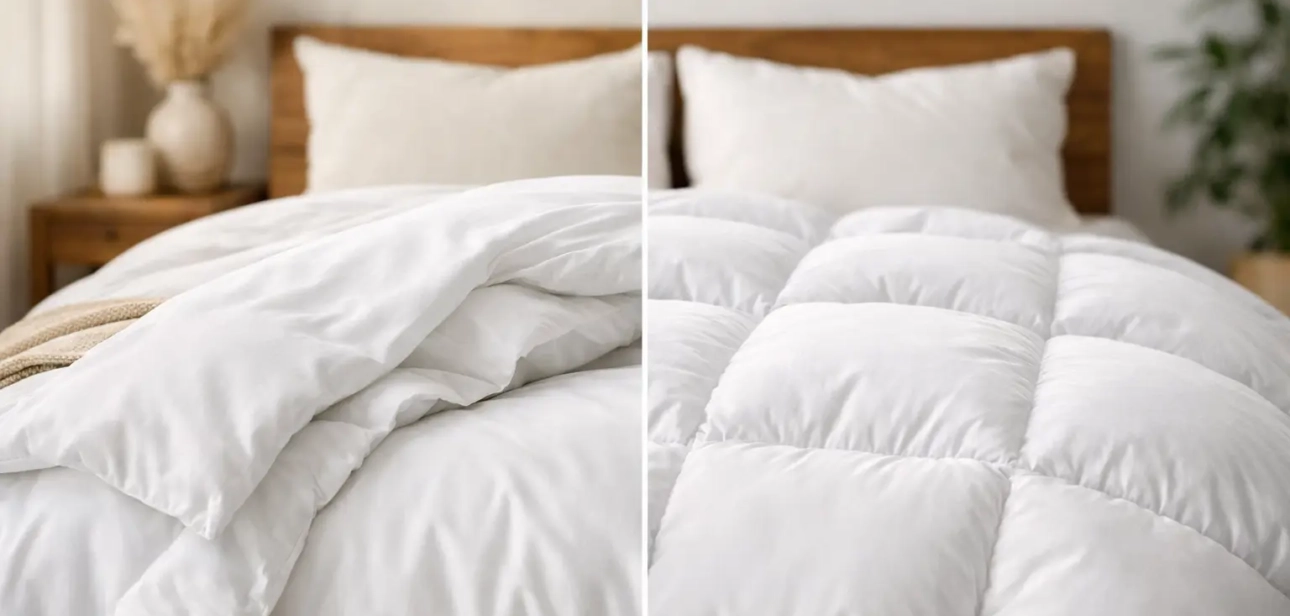
Duvet Cover vs Comforter: The Core Difference
A comforter is a single, quilted bedding piece with filling sewn inside. It is ready to place on the bed as-is, though you can add a decorative coverlet or throw on top. Because its outer fabric and insulation are permanently attached, it is straightforward and familiar.
A duvet is an insulated insert, usually filled with down, down alternative, wool, or another material. The duvet cover is the removable fabric shell that slips around that insert, much like a giant pillowcase. In everyday conversation, people often say duvet when they mean the complete set of duvet insert plus duvet cover.
That one structural difference changes nearly everything: how you wash it, how often you can change the look, how much warmth you get, and how much effort goes into making the bed.
Why a Duvet Cover Feels So Flexible
A duvet cover is especially lovely for someone who sees her bedroom as a mood board that can change with the seasons. The insert stays the same while the cover can shift from crisp white cotton in spring to warm gingham in fall, then perhaps a romantic floral or dusty rose linen when you want a softer point of view.
Easier everyday washing
The biggest practical advantage is care. Instead of washing a bulky filled comforter every time your bedding needs a refresh, you can remove and launder the cover with your sheets. This is particularly helpful for pet parents, allergy sufferers, hot sleepers, and anyone who enjoys a freshly washed bed on a regular basis.
Most duvet inserts need less frequent washing, although the right schedule depends on the fill and manufacturer instructions. Using a cover creates a protective layer between you and the insert, which can help preserve it longer.
More options for temperature control
Duvet inserts come in different weights, often described as lightweight, all-season, and heavyweight. That gives you a more tailored setup. A lightweight down-alternative insert can feel airy and cloudlike for summer, while an all-season option works beautifully in many climate-controlled homes.
If you live somewhere with distinct seasons or you tend to run hot, swapping the insert can be more practical than owning several full comforters. It can also be a sweet ritual: lighter layers when windows open in spring, plusher warmth when sweater weather arrives.
A polished, hotel-inspired look
Duvet covers tend to create that plush, gently rumpled bed silhouette seen in boutique hotels and Pinterest bedrooms. Linen has an effortless, lived-in texture; percale looks crisp and cool; sateen brings a subtle sheen and a more romantic drape.
The trade-off is that duvet covers take a little more work. Putting one on a fluffy insert can test your patience, especially with king-size bedding. Corner ties and button or zipper closures help keep the insert in place, but they do not make the process completely magical.
When a Comforter Makes More Sense
A comforter is the easygoing choice. It is one finished layer, no cover required, and it is often simpler to style quickly on a guest bed, dorm bed, or bedroom where you want to make the bed without a second thought.
It is wonderfully low-fuss
If you do not want to wrestle an insert into a cover or adjust corners that have migrated overnight, a comforter may be your answer. Smooth it out, add pillows, and you are done. For busy mornings, that simplicity matters.
Comforters are also useful for children and teens who are learning to make their own beds. There are fewer parts to manage, and a washable comforter can be an uncomplicated option for everyday life.
It may cost less upfront
You can often find a complete comforter set at an approachable price, sometimes with coordinating shams included. A duvet setup usually requires buying both an insert and a cover, which can add up initially, especially if you choose natural materials or a premium fill.
Still, the long-term math depends on your habits. A duvet cover lets you update your room without replacing the expensive insulated portion. If you love changing colors and prints, it may become the more economical choice over time.
It can be less ideal for frequent washing
A comforter is typically bulkier than a duvet cover and may not fit comfortably in a standard home washing machine. Some can be washed at home on a gentle cycle, while others may need a large-capacity machine or professional cleaning. Always check the care label before buying, not after the first spill.
For many people, this is the deciding detail. A cream comforter looks dreamy until coffee, makeup, a muddy paw, or a late-night snack enters the picture.
Choose Based on How You Actually Sleep
The prettiest bedding is the bedding that you can live with. Before picking a side in the duvet cover vs comforter debate, consider how your bed functions beyond its photo-ready moments.
If you sleep hot, look for breathable materials first. A lightweight duvet insert with a percale, linen, or cotton cover gives you flexibility, but a lightweight cotton comforter can work too. The fiber and fill matter more than the label on the package.
If you are cold at night, a duvet can be a particularly cozy choice because its loft traps warm air effectively. Down inserts are often very warm without feeling excessively heavy, while quality down-alternative options offer a softer, allergy-friendly feel. A comforter with a warm fill can be just as inviting, but you have fewer options to change the warmth without replacing the entire piece.
If you share a bed with someone whose temperature preferences are very different, a duvet setup offers room to experiment. You might try an all-season insert with breathable sheets, or use separate twin duvets on a larger bed for a Scandinavian-inspired arrangement that lets each sleeper choose her own warmth.
Materials Matter as Much as the Style
Whether you choose a comforter or a duvet cover, the outer fabric deserves attention. Cotton is a reliable favorite because it is breathable, soft, and easy to care for. Percale cotton has a crisp, cool hand feel, while sateen feels smoother and slightly warmer.
Linen is beloved for its relaxed texture and naturally airy quality. It is the kind of bedding that makes a room feel quietly expensive without trying too hard. It can wrinkle, but that is part of its charm rather than a flaw.
For a cozier look, velvet, brushed cotton, and washed microfiber can feel inviting in cooler months. Just be mindful that synthetic fabrics may sleep warmer and can hold onto static or pet hair more than natural fibers.
Color also changes the emotional temperature of a room. White and oat feel serene, pale blue feels fresh, blush feels softly romantic, and deep green or chocolate brown can make a bedroom feel cocooning and current. A duvet cover lets you play with these shifts more easily, while a neutral comforter can be an excellent anchor for colorful sheets and pillows.
The Best Choice for Your Bedroom Aesthetic
Choose a duvet cover if you love seasonal refreshes, prefer washing your top layer regularly, want adjustable warmth, or crave that full, layered editorial bed. It asks for a bit more setup, but it gives you more creative freedom.
Choose a comforter if you want an uncomplicated all-in-one layer, make your bed quickly, or prefer a lower upfront cost. It is a practical, cozy classic, especially when paired with beautiful sheets, textured pillows, and a throw at the foot of the bed.
There is no wrong answer, and plenty of well-styled bedrooms use both. You may keep a comforter in the guest room for easy care and use a duvet in your own bedroom where the details matter a little more. Let your choice make your evenings softer, your laundry routine kinder, and your bedroom feel like a place you are genuinely happy to come home to.