
Share This Article
A walking pad can make a tiny living room feel like it has a little more possibility in it. This walking pad review for apartment living looks beyond the pretty under-desk setup and asks the questions that actually matter when your neighbors are close, your square footage is precious, and your home is meant to feel peaceful.
For the soft-seeking soul who wants more movement without turning her apartment into a gym, a walking pad can be a genuinely lovely buy. But the right one is not simply the smallest or the least expensive. It is the model that fits your floors, your schedule, your storage situation, and the way you realistically want to move through the day.
Why walking pads suit apartment routines
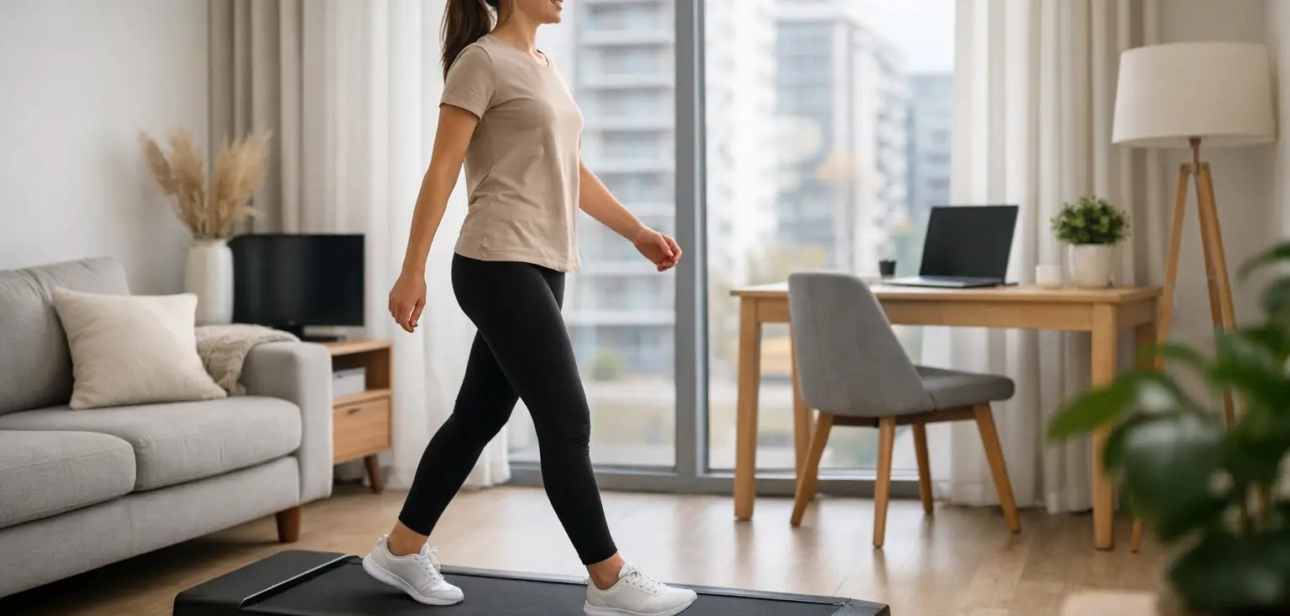
A walking pad is a slim, low-profile treadmill made primarily for walking. Many have no upright handlebars, and most are designed to slide under a sofa, bed, or console when the day is done. That compact silhouette is a large part of the appeal: it lets you take a meeting, watch a comfort show, or scroll through a mood board while getting in a gentle walk.
Unlike a full treadmill, a walking pad is not usually built for intense runs, steep hill training, or marathon-level mileage. Think of it as an everyday movement companion. It is especially sweet for people who work from home, live somewhere with difficult weather, or want to make their step goal feel less like another task on the list.
Apartment living also makes convenience more valuable. If getting a workout means changing clothes, taking an elevator, and finding a free machine in a shared gym, the barrier can feel surprisingly high. A walking pad removes much of that friction. Ten minutes between emails becomes ten minutes of movement, no elaborate routine required.
Walking pad review for apartment living: what matters most
The most photogenic walking pad is not necessarily the best choice for a rental. Before choosing one, focus on the features that protect your peace and your space.
Noise is more complicated than a decibel claim
Most walking pads are quieter than traditional treadmills at a walking pace, especially on a quality mat. Still, “quiet” does not mean silent. You will hear the motor, the soft rhythm of your steps, and sometimes a slight belt sound. In an older building with thin floors, vibration may travel farther than the actual motor noise.
A low speed of around 1.5 to 2.5 mph is usually apartment-friendly for daytime use. Faster walking creates more impact, particularly if you have a heavier stride. A dense treadmill mat is the easiest upgrade here. It helps reduce vibration, protects hardwood or vinyl flooring, and makes the machine feel more settled underfoot.
If you have downstairs neighbors, avoid treating a walking pad like a late-night cardio class. A quiet morning walk with socks or supportive walking shoes and a mat is far more considerate than power walking at 10 p.m. Small choices preserve the cozy energy of your home and your neighborly goodwill.
Storage dimensions matter more than folded dimensions
Brands often highlight how slim a machine is when folded or stored vertically. That is useful, but measure the whole path before you buy. Check the space beneath your bed, the clearance behind your sofa, and whether the machine can turn through your entryway or bedroom door.
A walking pad may be slim enough to store, yet still be awkward to move daily if it weighs 55 to 70 pounds. Many include front wheels, which help once one end is lifted, but this is not the same as effortlessly rolling a suitcase across the room. If you know you will need to put it away after every use, a lighter model can be the better real-life choice, even if it has a shorter deck or a lower top speed.
Deck size shapes how comfortable it feels
A narrow or short walking surface can work beautifully for casual steps, especially in a small apartment. But taller users and anyone with a longer natural stride should pay close attention to deck length. Feeling like you have to shorten your stride every few seconds makes a walking pad far less relaxing.
As a general rule, look for a deck that gives you a secure, unhurried walking rhythm rather than one that merely meets the minimum. Side rails also make a difference. A little extra width can help you feel centered, particularly while working at a standing desk or watching something on your phone.
Weight capacity is a safety feature, not a suggestion
A model’s stated weight capacity should comfortably accommodate the person using it. Choosing a machine at the very edge of its limit can affect stability, belt performance, and longevity. It is wise to leave some margin rather than shopping only by the lowest price.
This is also where ultra-compact models reveal their trade-off. The thinnest, lightest pads are charming for storage, but they may feel less planted underfoot and can have lower capacities. If stability is your top priority, accept a little more size and weight in exchange for a sturdier frame.
The features worth paying for
Walking pads can look very similar online, so it helps to know where a higher price can be meaningful. These are the features that tend to improve apartment life rather than simply adding a flashy spec sheet:
- A quiet, consistent motor with a walking-focused speed range.
- A remote that is responsive and easy to keep track of, or simple controls on the unit itself.
- Front wheels and a handle or grip point for moving the pad safely.
- A clear display for speed, time, distance, and steps.
- A long enough warranty and accessible customer support for a motorized item that will see frequent use.
An app can be fun, but it should not be the deciding factor. Some companion apps add workout tracking, leaderboards, or walking routes, while others feel like an unnecessary extra step. If your goal is gentle daily movement, reliable basics will matter long after the novelty of an app fades.
The honest trade-offs of owning one
Walking pads are not magical, and a thoughtful review should say so. First, they take up visual and mental space even when stored. If your apartment is already full, bringing home another large object can feel more stressful than motivating. It helps to decide where it will live before it arrives, not after the box is in your hallway.
Second, they need basic maintenance. The belt may need occasional alignment and lubrication, according to the manufacturer’s instructions. Dust and pet hair should be kept away from the belt and motor area. These small rituals are manageable, but skipping them can make a machine noisier or less smooth over time.
Third, an under-desk walking setup is not ideal for every kind of work. Easy email, calls, admin tasks, and casual meetings often pair well with a slow pace. Detailed writing, spreadsheets, or tasks that demand precision may be better done while standing still or sitting down. Let the pad support your routine instead of insisting it must transform every work hour.
How to create a calm, apartment-friendly setup
Place the walking pad on a flat surface with enough open room behind you and at the sides. Keep it away from curtains, loose rugs, and crowded furniture corners. A mat underneath is a smart choice, especially on hard flooring, and it can make the setup look more intentional rather than temporary.
For an under-desk arrangement, make sure your desk height allows your elbows to rest comfortably while you walk. Start slowly. Around 1 to 1.5 mph can feel surprisingly natural for calls and low-focus tasks. Keep water nearby, use a headphone-friendly playlist, and choose a pace that leaves you feeling refreshed instead of overstimulated.
If aesthetics matter to you, as they should in a home you love, keep the surrounding area simple. A clean charging station, a small catchall for the remote, and a neutral mat can turn a practical fitness tool into part of a thoughtfully lived-in space. It does not need to be hidden in shame. It just needs a home.
Who should buy a walking pad?
A walking pad is a strong match for apartment dwellers who want more low-impact movement, have limited space, and will use it consistently for easy walks rather than high-intensity training. It is particularly appealing if you work from home or find that short, frequent movement breaks are more sustainable than formal gym sessions.
It may not be the right fit if you want to run, need substantial incline training, live above very noise-sensitive neighbors, or have no practical place to store a heavy piece of equipment. In those cases, a compact exercise bike, walking outdoors, or a shared gym may serve you better.
The best walking pad for apartment living is not the one that promises a whole new personality. It is the one quiet enough to use often, easy enough to store, and comfortable enough that a soft Tuesday afternoon walk becomes one of the nicest parts of your day.