
Share This Article
Jellycat plush toys have earned steady popularity among parents and gift buyers who value dependable quality and pleasant tactile experience over passing fads. These Jellycat stuffed animals use high-grade polyester fabric that maintains smooth softness through regular washing and handling by young children. Embroidered facial features ensure complete safety from newborn stage forward, eliminating risks of detachable plastic parts or choking hazards during active nursery play. Many families keep these toys for years as they hold shape well and develop sentimental value across multiple children. The combination of consistent construction with occasional limited edition releases appeals to both practical buyers and casual collectors who appreciate understated quality without aggressive marketing hype.
However with pricing between $25-$60 not every Jellycat plush toy delivers identical practicality for daily family use. Jellycat farm plush designs work well for active toddler play while seasonal special editions suit permanent nursery display better than rough handling. Sizes range from compact 7-inch carry-along versions perfect for strollers to substantial 13-inch nursery centerpieces requiring dedicated shelf space. This guide covers practical selection factors and reviews specific Jellycat plush worth it options including a GUND comparison to identify genuinely valuable purchases versus trend-driven spending.
How to Choose the Right Jellycat Plush Toy
Start selection process by matching Jellycat plush toy size precisely to your child’s current developmental stage and available storage capacity. The 7-inch mini collection fits perfectly in diaper bags, stroller pockets, and overnight travel cases while providing sufficient hugging surface for infant grasp development. Medium 10-13 inch scales strike optimal balance for nursery shelf display and lap cuddling sessions without overwhelming small spaces. Larger 18+ inch floor-sitters demand substantial floor territory suitable for independent toddler play but challenge parental carrying capacity during travel.
Safety construction proves universally reliable across entire Jellycat stuffed animals lineup through exclusive embroidered detailing that eliminates small part detachment risks completely. Newborn-appropriate models feature lightweight hollow stuffing without weighted bases that might shift unexpectedly during supervised tummy time periods. Toddler designs incorporate subtle PE plastic pellet bases providing natural upright stability that withstands repeated knocking over and retrieval cycles characteristic of 18-36 month exploration phases. Hypoallergenic polyester fill combined with reinforced seam construction meets rigorous safety testing standards suitable from birth when paired with appropriate age supervision.
Washability represents significant practical advantage over plush market competitors generally. Standard Jellycat farm plush models tolerate gentle 30°C machine washing cycles followed by thorough air drying while preserving structural integrity and surface texture effectively. Always verify individual care label instructions as certain limited edition fabric combinations require hand spotting instead of full submersion. Polyester outer shells resist pilling and color fading noticeably better than cotton-blend alternatives while internal pellet distribution maintains consistency through multiple laundry rotations.
Material durability exceeds expectations within this price category significantly. The 100% polyester exterior withstands stretching, surface abrasion, and seam stress from enthusiastic toddler manipulation far better than discount store plush construction. Internal stuffing retains consistent loft without premature flattening even under nightly bedtime compression by active sleepers. UK-based pattern development ensures reinforcement at high-stress limb attachment points preventing common splitting failures observed in mass-market alternatives consistently.
Limited edition versus core collection purchasing decisions impact value proposition dramatically. Year-round Jellycat plush toys like farm animals maintain steady $25-35 pricing with broad age-appropriate utility spanning infancy through preschool years effectively. Seasonal spring collections or holiday exclusives command $45-60 premiums for unique textile patterns and color combinations that occasionally develop modest secondary market interest after production discontinuation. Regular collection pieces deliver strongest return on investment for active family households while limited releases justify expense primarily for permanent display purposes or strong personal color preferences.
Price positioning reflects manufacturing quality rather than arbitrary brand prestige alone. Entry-level 7-inch farm characters range $25-28 while nursery staple medium sizes occupy $32-40 bracket with exclusive 13-inch designs reaching $55-60 territory. These figures incorporate ethical labor standards, premium material sourcing, and detailed UK pattern-making uncommon among $10-15 mass-produced plush alternatives universally. Jellycat plush worth it calculation favors long-term replacement avoidance over lowest immediate acquisition cost strategically.
Premium pricing justifies itself through specific usage scenarios clearly. Multi-child families extract maximum value from wash-durable construction eliminating frequent toy replacement cycles entirely. Permanent nursery display installations benefit from distinctive limited edition patterning unavailable through standard channels. Gift purchasers gain subtle quality recognition advantage over generic big-box store alternatives consistently. Skip elevated pricing on basic animal silhouettes available year-round unless particular fabric preferences drive purchasing decisions specifically.
Jellycat vs GUND comparison reveals complementary strengths within plush market positioning. Both deliver newborn-safe embroidered construction and comparable initial fabric softness though Jellycat plush toys demonstrate superior laundering resilience alongside deeper sink-in surface texture preferred by tactile-sensitive children. GUND maintains 20-30% pricing advantage making immediate cuddling comfort accessible economically while Jellycat longevity benefits households planning generational toy transmission realistically.
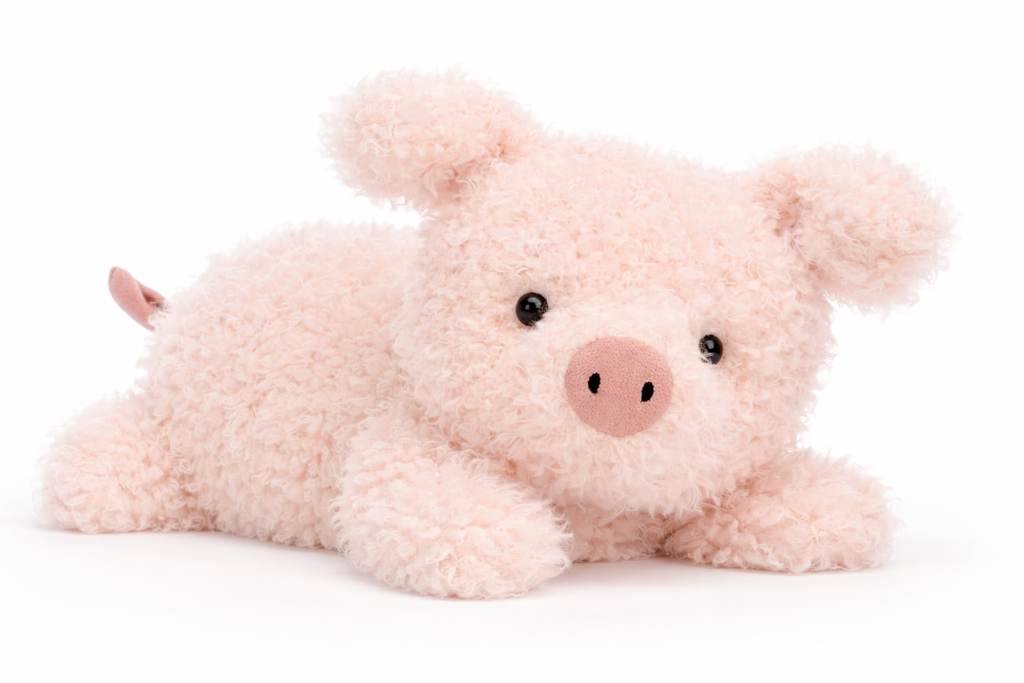
Jellycat Little Pig Stuffed Animal, 7 inches – Farmyard Plush Toy – Classic Children’s Gift
Jellycat Little Pig offers clean pink polyester body construction with curly fabric tail detail and minimal embroidered facial features within compact 7.1 x 3.1 x 5.9 inch dimensions easily managed by infant hands during grasp development. Smooth surface texture proves comfortable against sensitive baby skin while lightweight hollow stuffing prevents rolling hazards during floor play. Basic farm silhouette supports early animal identification without design complexity overwhelming young attention spans.
Pros include machine-washable construction that maintains shape through repeated spit-up and daycare cleaning cycles reliably. Embroidered detailing ensures newborn safety while simplifying parental laundry routines significantly. Portable scale travels effortlessly in stroller pockets and overnight hospital bags during newborn phase transitions smoothly.
Cons reveal limited physical dimensions proving insufficient for school-age children requiring substantial hugging surface area progressively. Acquisition pricing exceeds equivalent-scale basic plush toys from discount retailers by substantial margin without proportional size advantage specifically.
Jellycat Little Goat Stuffed Animal, 7 inches | Farmyard Plush Toy | Classic Children’s Gift
Jellycat Little Goat presents crisp white fabric body finished with subtle felt horn accents and embroidered goatee detailing packaged within 7-inch height complete with stabilizing pellet base construction. Clean Jellycat farm plush aesthetic supports fundamental pretend farm play scenarios without extraneous decorative complexity. Weighted bottom maintains reliable seated posture preventing constant parental uprighting during play sessions consistently.
Pros feature hypoallergenic material composition tolerating thorough machine washing cycles effectively. Stable construction withstands enthusiastic toddler knocking over cycles without structural compromise. Classic farm theme naturally encourages animal sound imitation and basic imaginative language development organically.
Cons expose compact scale restricting appeal beyond infant-toddler transition phases typically. Design simplicity lacks distinctive visual markers compared to seasonal pattern-specialized releases available periodically.

Jellycat Smudge Cow – Jellycat Spring Collection 2026 Exclusive
Jellycat Smudge Cow from Spring 2026 limited release combines cream base fabric construction with contrasting black spot patterning across weighted 13 x 5.1-inch dimensions featuring short-pile surface texture throughout. Seasonal farm theme distinguishes presentation from standard barnyard character offerings significantly while maintaining core Jellycat stuffed animals construction standards reliably.
Pros showcase posable weighted pellet construction maintaining shelf display positioning consistently. Distinctive spot pattern delivers visual interest exceeding plain animal silhouette alternatives noticeably. Full machine washability handles inevitable nursery soiling incidents effectively without shape distortion.
Cons reveal seasonal exclusivity supporting elevated acquisition pricing without proportional everyday utility enhancement specifically. Larger dimensions demand substantial nursery storage allocation compared to pocket-sized travel companions universally.
GUND Cozys Collection Cow, Stuffed Animal for Ages 1 and Up, Spring Decor Plush Toy, Cream/Blue, 10″
GUND Cozys Cow presents 10-inch seated dimensions featuring cream fabric body with blue spot contrast accents and basic embroidered facial construction designed primarily for nursery decor supplemented by light interactive play capacity. Spring-appropriate coloring bridges decorative and functional nursery roles effectively while maintaining age 1+ safety certification through reinforced stitching standards.
Pros deliver construction softness approaching Jellycat plush toys quality while maintaining significantly lower acquisition threshold accessibly. Age-appropriate reinforcement withstands active toddler manipulation phases reliably. Dual decorative-play functionality serves varied nursery environment requirements efficiently.
Cons expose surface cleaning limitations proving less convenient than fully machine-washable Jellycat construction alternatives consistently. Fabric surface depth lacks characteristic sink-in plushness expected by established brand preference demographics specifically.
Conclusion
Jellycat plush toys establish reliable position within premium nursery market through consistent construction quality justifying selective investment decisions strategically. Jellycat farm plush designs deliver optimal active play functionality while seasonal exclusives serve permanent display installations effectively. Selection success depends entirely upon matching physical scale to child developmental requirements alongside washability tolerance matching specific family lifestyle patterns precisely.
Jellycat vs GUND reveals complementary positioning clearly within plush segment—Jellycat construction endures institutional cleaning cycles superiorly while GUND delivers immediate tactile comfort economically. Machine-washable regular collection models maximize practical household utility unless permanent decorative installation represents primary acquisition motivation fundamentally. Patient purchasing avoids seasonal price inflation while securing core functionality reliably.