
Share This Article
A soft life is not a perfectly styled apartment, a luxury skincare shelf, or a schedule with zero stress. It is the feeling of coming home to yourself, even on an ordinary Tuesday. Learning how to create a soft life aesthetic is really about choosing details, routines, and boundaries that make your daily life feel gentler, prettier, and more cared for.
The look may be everywhere on TikTok, Pinterest, and Instagram, but its lasting appeal goes deeper than a blush-pink color palette. For the soft-seeking soul, this aesthetic offers a sweet reminder: your life does not need a special occasion to deserve beauty.
Start With What Softness Means to You
The most convincing soft life aesthetic is personal. For one person, it looks like linen bedding, a quiet morning coffee, and a home that smells faintly of vanilla. For another, it means a weekly pilates class, fresh tulips by the sink, satin pajamas, and fewer obligations that drain her energy.
Before buying anything, think about the moments when you feel most rested and most like yourself. Maybe you love being outdoors, cooking slowly, getting dressed with care, or spending an evening with a book instead of your phone. Those answers should shape your version of softness more than any trending mood board.
There is also a useful distinction to make: soft living is not the same as avoiding every hard thing. You can have an ambitious career, children, a small space, a limited budget, or a very full season of life and still create pockets of ease. The goal is not to perform luxury. It is to make your real life feel more supportive.
How to Create a Soft Life Aesthetic in Your Space
Your home is often the easiest place to begin because the smallest changes can shift the mood immediately. You do not need to redecorate every room. Focus first on the areas you see at the beginning and end of the day: your bed, bathroom, kitchen counter, and favorite corner to sit in.
Choose a calm, lived-in palette
Soft life interiors usually lean warm rather than stark. Think creamy white, butter yellow, pale pink, sage, dusty blue, soft brown, or warm gray. You do not have to commit to one color. A neutral base with a few romantic accents feels relaxed and timeless, while an all-pastel room can feel more theme-like if it is not truly your taste.
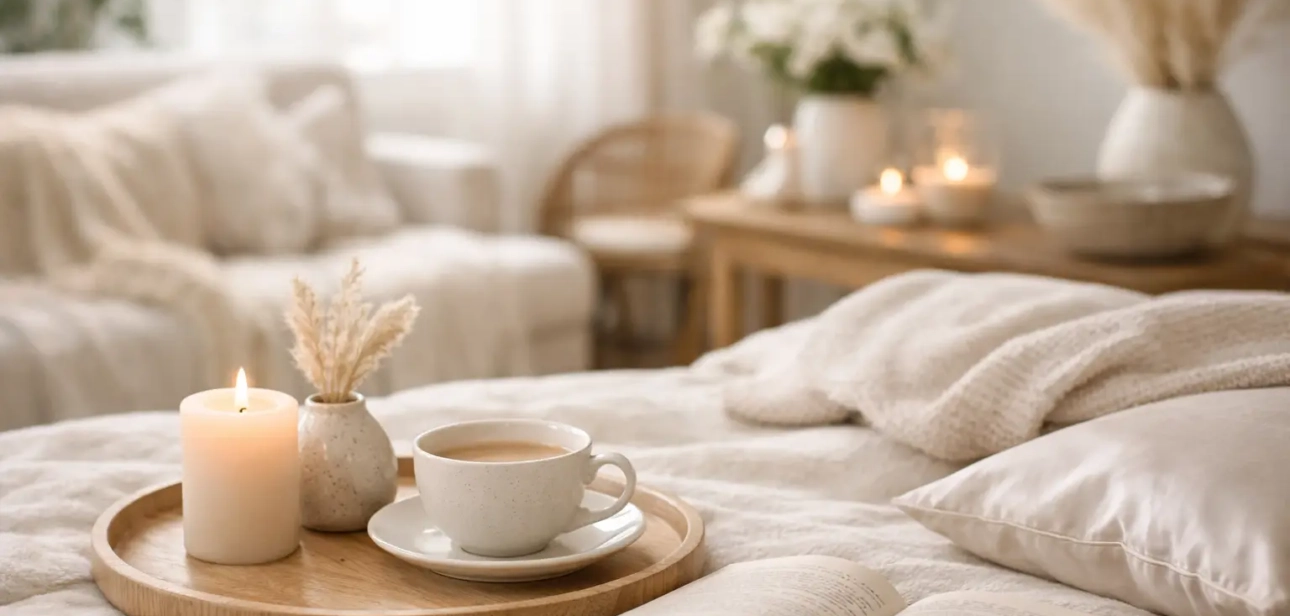
Bring in texture before more decor. A washed cotton duvet, fluffy bath towels, a knit throw, a small rug underfoot, and curtain panels that soften harsh light can make a basic room feel instantly more inviting. Natural materials such as wood, ceramic, cotton, glass, and linen help create that easy, collected feeling.
Edit visual noise with kindness
A soft life aesthetic is not about owning almost nothing. It is about letting the things you love breathe. Clear the surface where you make coffee, organize your bedside table, and give frequently used items a beautiful home in a tray, basket, or simple glass jar.
Try creating one intentional little scene in each room. A bedside table might hold a lamp with warm light, a water carafe, hand cream, and a favorite book. In the bathroom, a pretty soap dispenser, a candle, and folded towels can turn a rushed routine into a small ritual. These are simple details, but they make care feel visible.
Make lighting part of the mood
Overhead lighting can be useful, but it rarely feels romantic. Use lamps in the evening, choose warm-toned bulbs, and let natural light do more of the work during the day. A candlelit dinner for one, a tiny lamp in the kitchen, or a string of delicate lights around a reading nook gives everyday moments the softness they deserve.
Build Gentle Routines, Not a Perfect Schedule
The soft life trend can become exhausting when it turns into a long list of habits to maintain. You do not need a two-hour morning routine before sunrise to live beautifully. Pick a few rituals that genuinely make your day better and keep them realistic enough to repeat.
A gentle morning might be as simple as opening the curtains before checking notifications, drinking water from a glass you love, and putting on a playlist while you get ready. In the evening, take five minutes to reset one room, wash your face slowly, and prepare tomorrow’s outfit. The routine matters less than the message behind it: you are worth tending to.
Give yourself permission to adjust based on the season. During a busy work week, softness may mean ordering dinner and taking a long shower. On a quiet Sunday, it may mean baking something sweet, changing the sheets, or wandering through a local flower market. Both count.
Dress Like Your Life Is Worth Celebrating
A soft life wardrobe is less about wearing one specific silhouette and more about choosing clothes that make you feel graceful, comfortable, and quietly put together. Think soft cardigans, relaxed trousers, cotton dresses, ballet flats, delicate jewelry, matching lounge sets, and pieces with a little movement.
Color can help set the tone, but do not feel trapped by beige and blush. A deep cherry lip, a black slip skirt, or a bright blue silk scarf can still feel soft when the overall effect is intentional. The best outfits have some ease in them. They allow you to move through the day without constantly tugging, adjusting, or wishing you had worn something else.
Consider creating a small rotation of outfits for the moments you want to romanticize most: a polished coffee run look, an easy work-from-home set, a dinner outfit that feels special without feeling fussy, and pajamas that make bedtime feel like a treat. Rewearing favorites is part of a sustainable, personal aesthetic.
Let Beauty Feel Sensory, Not Complicated
Soft beauty is often about feeling fresh, touchable, and comfortable in your own skin. A dewy base, brushed brows, cream blush, lip balm, and a fragrance that makes you feel lovely can be more than enough. If full glam is your happy place, it belongs here too. The key is choosing beauty rituals that feel expressive rather than obligatory.
Scent is especially powerful because it can turn ordinary moments into memories. Keep a body lotion, perfume, or room fragrance you reach for when you want to feel grounded. Floral, tea, clean musk, soft woods, and vanilla notes all work beautifully, but your signature scent should be something you want to lean into all day.
A soft life also includes the unglamorous kind of care: eating regularly, protecting your sleep, moving your body in a way you enjoy, and making appointments you have been putting off. A face mask is lovely. So is going to bed before you are completely depleted.
Protect the Energy Around Your Aesthetic
No amount of beautiful decor can compensate for a life that feels constantly overextended. One of the most meaningful ways to create softness is to become more selective with your time. That might mean declining plans when you need rest, silencing notifications for an hour, or choosing friendships where you do not have to shrink or scramble for attention.
This can feel uncomfortable at first, especially if you are used to equating busyness with worth. Start small. Leave margin between plans. Take your lunch away from your desk once a week. Stop saving the good mug, the nice robe, or the expensive candle for a future version of your life.
Create the Look Without Overspending
Soft living can look expensive online, but it does not need to be. Start with what you already own and make it feel intentional: wash and fold the throw blanket, display the perfume you love, print a photo that makes you smile, or move a lamp into a darker corner. Fresh flowers are beautiful, but a grocery-store bouquet, a clipped branch, or even a bowl of citrus brings the same sense of life.
When you do shop, prioritize pieces that improve your daily experience over one-time decor purchases. A comfortable pillow, warm lamp, quality towel, or everyday glassware will likely bring more joy than a shelf full of objects. Choose slowly, keep only what feels like you, and let your home evolve with your life.
The softest aesthetic is never about getting every detail right. It is the small, loving decision to make room for pleasure, rest, and beauty exactly where you are.