Share This Article
That closet full of clothes you suddenly do not want to wear after a breakup is not always a shopping problem. Sometimes it is a color problem. The red dress you bought for someone else’s favorite restaurant, the gray sweaters that matched a low season, the black basics you reached for when you wanted to disappear – they can carry more emotional weight than a hanger should. This guide to closet color analysis is about seeing what you own with fresh eyes and building a wardrobe that feels more like your next chapter.
Closet color analysis is not about following strict rules or throwing out every shade that does not appear on a seasonal color chart. It is a practical edit: noticing which colors make you look awake, feel confident, photograph well, and actually want to wear when you are meeting someone new or making plans with yourself.
What Closet Color Analysis Can Tell You
Personal color analysis usually starts with your skin’s undertone and the colors that complement it. Closet color analysis takes that idea one step further. It looks at the actual palette of your wardrobe, then asks whether it supports the life you have now.
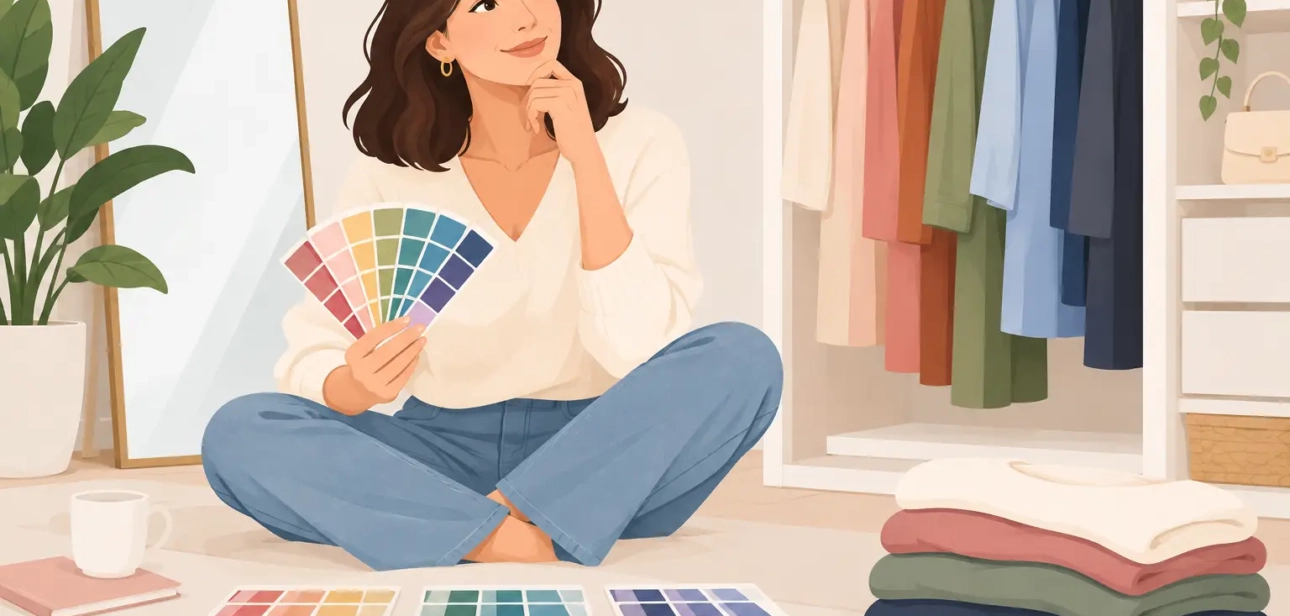
Open your closet and stand back. Is nearly everything black, navy, beige, or gray? Do you own fifteen versions of a color you rarely choose? Do your favorite pieces share a common softness, brightness, or warmth? Your closet has a visual point of view, even if you never consciously chose one.
This matters when you are reinventing yourself after heartbreak or entering a new dating era. Clothes cannot create self-worth, but getting dressed in colors that feel alive on you can make the daily ritual less draining. A great first-date outfit should not feel like a costume. It should make you feel recognizable to yourself.
Start With the Colors You Already Reach For
Before buying anything, pull out the pieces you wear on repeat. Include the shirt that earns compliments, the top in a flattering color that makes your skin look clear, the jacket you pack for every weekend away, and the dress that always feels easy.
Lay them on your bed or take a quick photo in natural daylight. Look for patterns. You may notice that your best pieces are all soft and muted, such as dusty rose, sage, cream, and denim blue. Or perhaps you light up in crisp contrast: bright white, cobalt, cherry red, and true black.
Then make a second pile for clothing that is technically fine but somehow stays unworn. The issue may be fit or fabric, of course. But color is often the quiet reason a perfectly good blouse feels slightly off. When reviewing a wardrobe, consider color alongside fit, versatility, and cost before purchasing. A pale yellow can wash out one person and make another look sunlit. There is no universally flattering shade, despite what trend cycles suggest.
Notice How a Color Makes You Feel
A color can suit your complexion and still not fit your emotional style. If a bright red makes you feel exposed, you do not need to wear it just because it is considered flattering. Likewise, if black feels chic, protective, and deeply you, there is no need to ban it in pursuit of a more “colorful” closet.
The goal is not to become a different woman for a date, an ex, or a Pinterest board. It is to distinguish between colors that make you feel self-conscious and colors that help you take up space with ease.
Find Your Best Neutrals First
Neutrals do most of the quiet work in a closet. They are the jeans, coats, trousers, knits, shoes, and bags that make getting ready feel simple. Finding the right ones is more useful than chasing a perfect seasonal palette.
Try comparing white with ivory, black with charcoal, camel with taupe, and navy with softer denim. Hold each option near your face in daylight, ideally without heavy makeup. The better choice usually makes your eyes more noticeable and the shadows around your mouth and under-eyes less obvious. The less helpful one can make your skin look dull or emphasize redness.
If stark white and jet black feel too intense, try cream, mushroom, soft navy, espresso, or charcoal. If beige has always felt bland, you may prefer richer camel, olive, chocolate, or deep navy. A closet built around two or three neutrals gives you freedom without creating the uniform effect that can happen when every purchase is black. If you are refining your accessories too, see our guide to fall handbag trends for ideas that work with your palette.
For the soft-seeking soul rebuilding her style after a hard season, a warm ivory sweater or an inky blue blazer can be a gentler place to start than an entire closet overhaul.
Add Accent Colors That Work for Your Real Life
Once your neutrals are clear, choose three to five accent colors you genuinely enjoy wearing. Think of them as your personal palette, not a rulebook. A polished combination might be navy, cream, rose, and burgundy. Someone with a more playful dating wardrobe might choose denim, white, tomato red, butter yellow, and cobalt.
The key is repeatability. If a color works with your jeans, a favorite neutral pant, and a coat you already own, it has earned a place in your closet. If it only works in one carefully planned outfit, it may be a beautiful occasional piece rather than a foundation color.
When shopping at places like Target or H&M, this filter can prevent the familiar rush of buying a trendy top that has nowhere to go. Check whether the shade belongs with at least three items you already wear. If it does, it is more likely to become part of your life rather than another almost-right purchase.
Use Makeup and Accessories as Low-Stakes Tests
Not ready to commit to a colorful dress? Test a shade close to your face first. A scarf, earrings, headband, lipstick, or nail color can show you whether berry, coral, forest green, or icy blue feels right.
This is especially helpful if you are growing out of an old identity. Maybe you spent years wearing the colors a former partner loved. Trying a new blush tone or a blue silk scrunchie is a small, private way to ask what you prefer now. Personal reinvention rarely arrives all at once. It often begins with details.
A Guide to Closet Color Analysis for Dating
Dating can make anyone overthink an outfit. You want to look attractive, but not like you tried too hard; relaxed, but still memorable. Color offers a useful shortcut because it creates mood before you say a word.
For a daytime coffee date, soft blues, warm neutrals, blush, and denim tend to feel approachable without being fussy. For dinner or a night out, deeper colors such as burgundy, emerald, chocolate, navy, or a confident red can feel intentional and romantic. That said, the best date-night color is the one that lets you focus on the conversation instead of adjusting your clothes all evening.
Consider the setting, too. A bright dress may be perfect for an outdoor summer date but feel out of place at a candlelit wine bar if it makes you feel overly visible. A monochrome black look can be chic for a city evening, while a softer contrast may better suit a casual first meeting. It depends on your personality, the venue, and what helps you feel grounded.
Edit Gently, Not Dramatically
Color analysis can tempt you into a ruthless purge, especially when you want a clean emotional break. Resist the pressure to discard everything at once. Separate pieces into keep, test, tailor, donate, and sentimental piles.
Sentimental clothing deserves its own category. You do not have to wear the sweater tied to an old relationship, but you also do not have to make a dramatic decision while you are still hurting. Fold it away for a few months. Distance can clarify whether it is a cherished item, a useful basic, or simply a memory you no longer need to store in your closet.
For future purchases, aim for a simple balance: most items should live within your core neutrals and accent colors, while a few can exist purely because they bring you joy. A closet should be coherent enough to make mornings easier and personal enough to hold your surprises.
Getting dressed after a breakup, before a first date, or during a quieter season is not about becoming more desirable to someone else. It is a chance to choose colors that make you feel present in your own life – and that is always a beautiful place to begin.