
Share This Article
The first time you pull a golden sheet pan dinner from the oven, or flip a pancake without nervously scraping at the skillet, cooking starts to feel less like a test and more like a small act of care. To build confidence in the kitchen with CarawayHome.com is not about becoming the person who makes complicated sauces on a weeknight. It is about creating a space, a rhythm, and a collection of tools that make everyday meals feel calmer, prettier, and much more possible.
For the soft-seeking soul who wants her kitchen to feel as considered as the rest of her home, confidence often begins before the recipe does. It begins with reaching for a pan you enjoy using, knowing where your essentials live, and giving yourself permission to keep dinner uncomplicated.
Build Confidence in the Kitchen With CarawayHome.com, One Routine at a Time
A beautiful kitchen does not have to be a showroom, and a confident cook does not need an overflowing cabinet. In fact, too many mismatched tools can make cooking feel more chaotic. A thoughtful core collection does the opposite: it makes the next step obvious.
CarawayHome.com is known for cookware and kitchen pieces designed with an elevated, color-conscious point of view. That visual ease matters more than it may seem. When the pot, lid, utensil, and storage solution each have a place, the kitchen becomes less of a cluttered task zone and more of a room you want to spend time in.
Of course, aesthetics alone will not teach knife skills or season a sauce. But the right tools can remove a few tiny points of friction, and those moments add up. A pot that is easy to clean, a pan that heats predictably, and a lid you can find without digging through a drawer all make it easier to cook again tomorrow.
Start with meals you already want to eat
Confidence grows fastest when you repeat a few friendly recipes, not when you attempt a new viral dish every night. Choose three or four meals that suit your actual life: a lemony pasta, crispy salmon with vegetables, a cozy soup, or breakfast tacos that turn leftovers into something lovely.
Make these recipes enough times that you no longer need to read every line. You will learn what medium heat looks like on your stove, how long your vegetables need to soften, and whether your family prefers extra garlic. That knowledge is the beginning of kitchen intuition.
There is no prize for making every component from scratch. Rotisserie chicken, jarred marinara, bagged salad, and frozen rice can all belong in a beautiful dinner. The goal is to feed yourself well with less second-guessing, not to perform perfection.
Let Your Cookware Support the Learning Curve
Reliable cookware helps you focus on the food instead of fighting the pan. If you are building a kitchen from the ground up, prioritize the pieces that cover the greatest number of meals: a sauté pan or frying pan, a medium saucepan, a larger pot for pasta and soups, and a baking sheet or roasting pan.
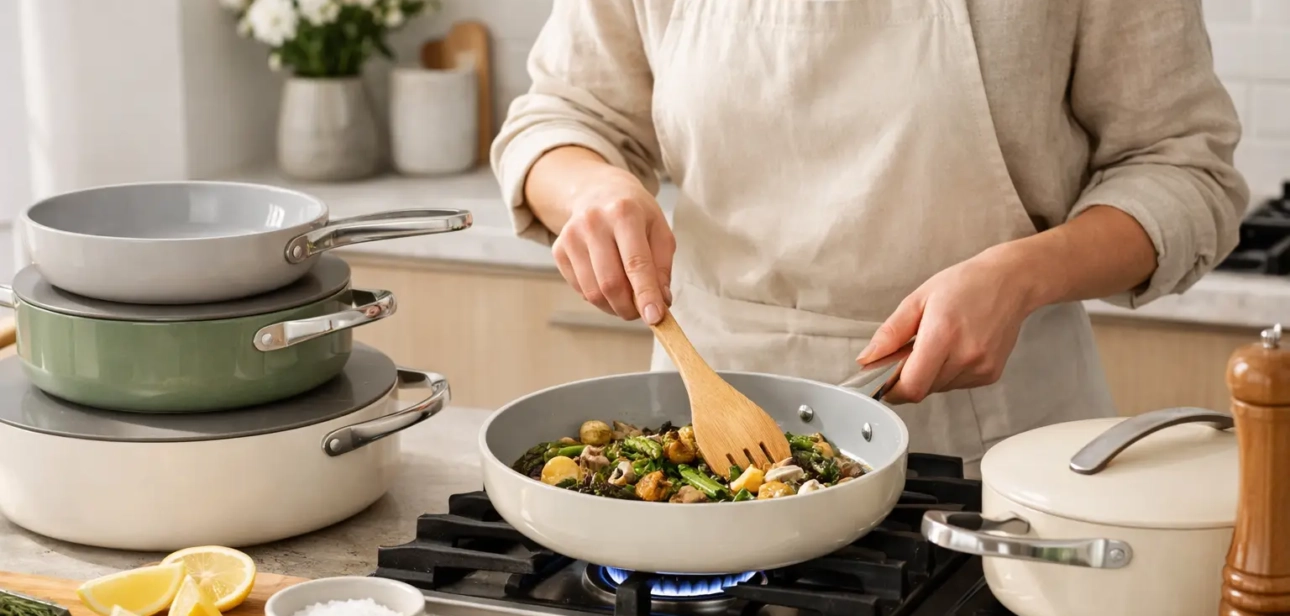
Caraway’s ceramic-coated cookware appeals to people who want a clean, modern look alongside an easier everyday cooking experience. For dishes such as eggs, delicate fish, vegetables, and quick pasta sauces, a well-cared-for nonstick-style surface can feel especially forgiving. You are less likely to lose half your breakfast to the pan, which is a very real morale boost on a Monday morning.
There are trade-offs, as with any cookware. Ceramic-coated pans usually need gentler care than stainless steel or cast iron. High heat, abrasive scrubbers, and metal utensils can shorten their lifespan, so it is wise to use low to medium heat and choose wood, silicone, or nylon tools when the manufacturer recommends it. Stainless steel may be a better choice for someone who loves an intensely hot sear, while cast iron has its own learning curve and care routine.
The best cookware is not the kind that looks impressive in a cabinet. It is the kind that fits how you cook now and makes you curious to cook a little more often.
Learn heat before you learn complicated techniques
Many kitchen mishaps are not recipe failures. They are heat failures. A pan that is too hot can scorch garlic in seconds and make proteins stick. A pan that is too cool can leave vegetables pale and watery instead of caramelized.
Give your pan a minute or two to warm, then add your oil or butter. Watch for a gentle shimmer rather than smoke. If you are unsure, begin at medium heat and adjust slowly. This one habit will make your cooking feel more deliberate almost immediately.
Try paying attention to the sensory details: the sound of onions when they hit the pan, the scent of butter as it foams, the way a tomato sauce thickens around the edges. Recipes provide a map, but your senses tell you where you are on it.
Create a Kitchen That Invites You Back
The most stylish kitchen habit is also one of the least glamorous: resetting the room after you cook. You do not need to deep-clean every evening. Simply wash what you can, wipe the counter, return spices to their place, and let the sink be as clear as possible before bed.
That small reset protects tomorrow’s energy. When you walk into a peaceful kitchen, making oatmeal or heating soup does not feel like the opening scene of a huge chore. It feels like a soft little ritual.
Storage can help here, too. Keeping lids organized, grouping baking tools together, and giving oils and seasonings a consistent home will save time in ways that feel surprisingly luxurious. A kitchen can be modest in size and still feel composed when it is organized around your routines rather than a fantasy version of them.
If you love color, let your cookware be part of the room’s personality. A warm cream, muted green, or happy pop of color can make an open shelf or stovetop feel intentional. Just remember that the prettiest setup is one you can maintain. If displaying every piece makes cleaning harder, keep the visual romance to a few favorites and tuck the rest away.
Give Yourself a Few Low-Stakes Wins
Not every meal needs to become content, and not every dinner needs a new technique. Make room for recipes that are almost impossible to overthink. A simple soup, a one-pan chicken dinner, a grilled cheese with a crisp salad, or a chocolatey skillet dessert can rebuild your confidence after a kitchen flop.
It also helps to choose one skill at a time. Spend a week getting comfortable roasting vegetables. Then learn how to cook rice without checking it every two minutes. Another week, practice a vinaigrette by tasting and adjusting until it feels right. These tiny lessons are more useful than memorizing a dozen complicated recipes you will never repeat.
When something goes wrong, resist the urge to call yourself bad at cooking. Maybe the pasta water was not salty enough. Maybe the chicken needed five more minutes. Maybe the recipe creator has a stronger oven than yours. Make a note, adjust next time, and keep moving. Every capable cook has burned onions, undercooked potatoes, and served a meal that looked much better in her imagination.
Make the everyday meal feel a little special
Confidence also comes from enjoying what you make. Plate dinner instead of eating directly from the pan when you have the energy. Light a candle. Add a squeeze of lemon, fresh herbs, or a handful of flaky salt at the end. These are small details, but they remind you that a Tuesday night meal deserves tenderness too.
The point is not to turn your kitchen into another place where you need to get everything right. Let it be a place where you practice, nourish yourself, and make ordinary moments feel more beautiful. Start with one favorite pan, one easy recipe, and one evening you are willing to try again. That is more than enough to begin.