
Share This Article
Butterfly haircut has exploded across TikTok. Viral tutorials showcase forward ponytail cutting techniques, creating instant layers within minutes, positioning DIY execution as a substitute for professional styling entirely.
The trend simplifies what is fundamentally a structured, layered haircut, where short top layers generate volume while longer base layers preserve length, which creates the signature winged effect. Social media demonstrations emphasize speed and accessibility, but often overlook layer balance, face framing accuracy, and density control, which directly impact final results.
DIY methods produce acceptable soft layering under controlled conditions, while salon execution refines structure through sectioning and elevation angles ensuring symmetry and polish consistently. The gap between viral expectation and real-world outcome depends on hair type, cutting precision, and styling capability, not just the technique itself.
This guide will help you in analyzing DIY vs salon results, layering structure, styling performance, and who actually achieves the butterfly haircut successfully.
How to Choose the Right Butterfly Haircut Approach
Butterfly haircut selection begins with execution method verification since DIY ponytail cutting gives generalized layers while salon layering delivers customized face-framing precision. DIY works best for straight to mildly wavy textures whereas salon techniques adapt across density variations including thick and coarse hair types effectively. Cross-result consistency doesn’t exist requiring expectation alignment before attempting either method realistically.
Hair length threshold spans shoulder-length minimum through waist-length optimally, with shorter hair lacking sufficient layering contrast for visual impact. Density scale divides into fine hair benefiting from volume illusion while thick hair requires internal thinning preventing excessive bulk formation.
Face compatibility aligns strategically oval, and heart shapes benefit from framing lift, while round faces gain elongation through vertical layering. Square faces require softer edge blending preventing harsh angular reinforcement specifically.
Layer distribution organizes systematically top layers provide crown volume, mid-length layers create movement, while base length anchors overall fullness maintaining styling flexibility. Improper distribution leads to disconnected appearance reducing aesthetic cohesion significantly.
How to do a Butterfly Haircut at Home
DIY butterfly haircut follows a forward ponytail cutting technique, designed to create quick layered separation without requiring professional tools or advanced sectioning skills. Hair is secured into a high ponytail positioned near the forehead, pulled forward under consistent tension, and cut horizontally to produce a graduated length difference forming soft cascading layers automatically.
Execution accuracy depends heavily on tension control, cutting angle, and hair alignment, since uneven pull or tilted cutting leads to inconsistent layer distribution affecting final shape significantly. Straight and mildly wavy textures respond most predictably, while thicker or highly textured hair increases variation in outcome.
Accessibility remains the primary advantage, eliminating salon dependency completely. Fast execution under 10 minutes suits low-maintenance routines requiring minimal effort. Acceptable layering results appear on straight hair with limited sectioning complexity, making it viable for beginners testing layered styles initially.
Uneven layer distribution occurs frequently, particularly on thick, coarse, or wavy hair types where natural volume disrupts symmetry. Lack of angle control reduces face-framing precision, often resulting in generic rather than tailored layering. Overcutting risk remains high, with limited correction options available without professional intervention.
However, DIY butterfly haircut functions best as entry-level experimentation, not a replacement for precision salon layering. It delivers basic volume and movement but lacks the structural refinement required for balanced, face-specific results consistently.
Salon Butterfly Haircut Execution
Salon butterfly haircut utilizes sectioned layering with controlled elevation angles, typically 90–180 degrees, ensuring uniform layer graduation across the head structure. Stylists customize front framing based on jawline, cheekbone, and forehead proportions improving overall balance significantly.
Pros establish symmetrical layering with refined blending eliminating harsh transitions completely. Face-specific customization enhances overall aesthetic compatibility reliably. Long-term grow-out remains cleaner requiring less frequent correction visits.
Cons involve higher cost relative to DIY methods. Styling dependency on tools persists for optimal results. Over-layering risk exists if not executed conservatively by stylist specifically.
Salon approach delivers maximum visual impact with minimum structural risk strategically.
Styling the Butterfly Haircut Efficiently
Butterfly haircut performance depends heavily on styling activation, since layers remain visually subtle without directional shaping. Blowout technique remains primary method emphasizing lift and outward flick, enhancing winged effect consistently.
Blowout styling utilizes round brush or blow-dryer brush, directing front layers away from face creating volume concentration near crown. Mid-length layers require slight bend rather than full curl maintaining natural flow.
Soft wave styling applies minimal heat focusing on mid-sections preserving layered structure without over-defining ends excessively. Air-dry methods produce relaxed look but reduce volume separation noticeably.
Inefficient styling leads to flat appearance diminishing haircut’s core advantage fundamentally.
Tools That Improve Results Significantly
Butterfly haircut styling benefits from multi-functional tools combining heat and shape direction, reducing time while improving consistency. Blowout brushes replace separate dryer + round brush workflow simplifying execution practically.
Recommended tools:
1. Blowout Brush
Combines drying and shaping in a single step, creating volume and lift that enhances butterfly layers efficiently.
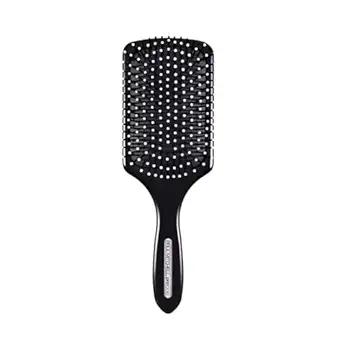
2. Large Barrel Curling Wand
Creates soft, outward bends that define layered movement without forming tight curls.
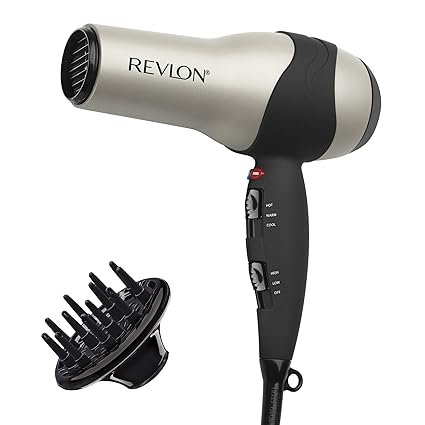
Enable clean hair separation, improving control and ensuring even styling across multiple layers.
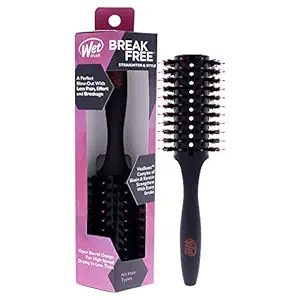
4. Hot Air Styler
Delivers balanced heat and airflow, maintaining smoothness while supporting volume in layered cuts.
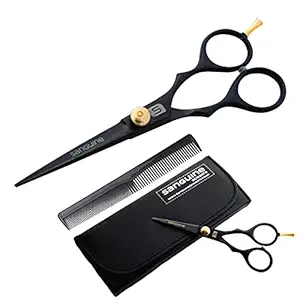
These tools enhance layer separation, volume retention, and styling speed, directly impacting final appearance quality objectively.
Who Should Actually Get This Haircut
Butterfly haircut suits individuals seeking volume without sacrificing length, particularly those with fine to medium hair density requiring lift enhancement. Long hair lengths maximize visual layering effect while straight and slightly wavy textures display structure most clearly.
Not ideal for very short hair due to insufficient layering depth or tightly curled textures where layer visibility reduces significantly. Extremely thick hair requires controlled thinning to avoid triangular bulk formation near ends.
Suitability depends more on hair behavior under layering than trend popularity fundamentally.
Common Mistakes That Can Ruin Your Butterfly Haircut
Butterfly haircut results degrade primarily due to improper layer placement and overcutting, both of which disrupt the intended volume distribution. Cutting too much length from the top section reduces contrast between layers, eliminating the signature winged effect entirely. Uneven tension during DIY cutting leads to asymmetry, while ignoring face shape results in poorly positioned front layers that fail to enhance features.
Over-thinning thick hair creates excessive wispy ends instead of controlled movement, whereas under-layering fine hair limits volume generation. Incorrect styling direction, especially inward curling, collapses the layered structure, making the haircut appear flat rather than dimensional. Avoiding these errors ensures the haircut performs as intended structurally and visually.
How to Maintain the Butterfly Haircut Long-Term
Butterfly haircut maintenance depends on layer retention and volume preservation, both of which diminish over time without regular upkeep. Trimming every 8–12 weeks prevents layers from blending into a uniform length, maintaining separation and movement.
Styling consistency plays a critical role, blow-drying with lift at the crown sustains volume while minimal product usage prevents layer weighing. Lightweight volumizing products perform better than heavy serums, which flatten the structure.
Hair growth gradually reduces the top-layer lift effect, requiring periodic reshaping rather than full re-cutting. Long-term success relies on maintaining layer contrast, controlled density, and consistent styling habits, ensuring the butterfly haircut retains its defining shape.
Conclusion
Butterfly haircut delivers layered volume efficiency without length compromise, positioning it as a functional upgrade over traditional uniform layering techniques. DIY methods provide accessible entry with moderate results while salon execution ensures precision, balance, and long-term maintainability consistently.
Styling remains critical, without blowout or directional shaping, layered structure loses visual impact significantly. Tool-assisted styling maximizes performance while reducing effort making haircut practical for daily routines.
Success depends on aligning execution method, hair type, and styling capability, rather than blindly following trend-driven adoption patterns.